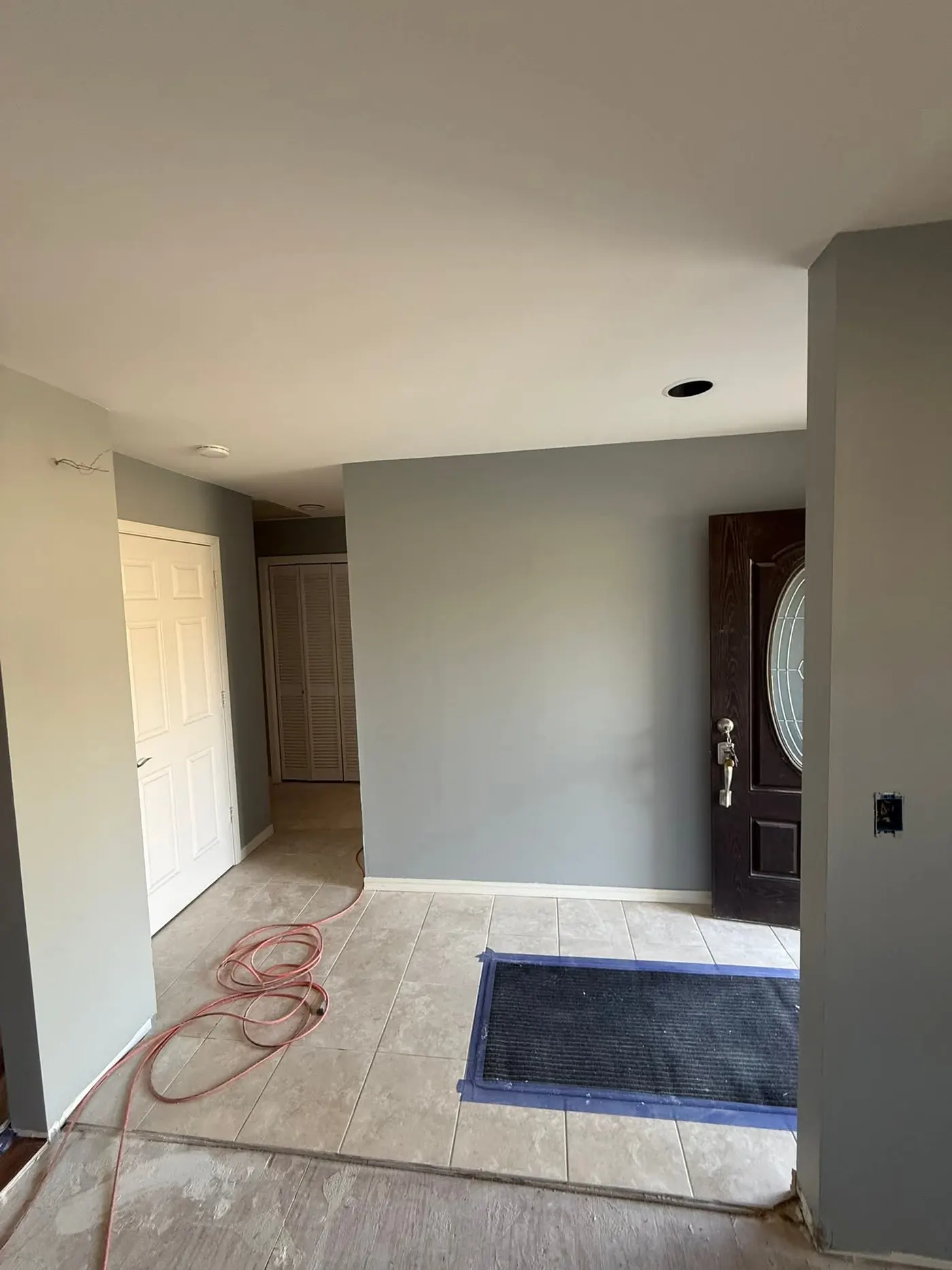
Condo painting in winter, done the HOA way.
Building rules, shared walls and closed windows, planned before the first drop cloth goes down.
Winter is a good time to repaint a Lakewood condo or townhome, as long as the plan starts with the building, not the paint. Get the HOA or management company's work rules in writing, send a certificate of insurance before day one, reserve the elevator and parking, warn the neighbors who share your walls, and choose low-odor water-based coatings because the windows will mostly stay shut. If the building went up before 1978, lead-safe rules apply to any sanding or scraping.
Why winter suits condo interiors (and the one catch)
Our Lakewood crews move indoors once nights turn cold, so December through March is when interior dates are easiest to get. Condo and townhome owners benefit most: no exterior work competing for the calendar, and fewer moving trucks fighting over the loading zone than in summer.
The catch is air. Denver's normal overnight lows sit at or below freezing from November through March, which means most owners will not want windows open for long stretches. The chart shows how long that closed-window season runs.
Middays are friendlier. December's average high is about 43°F and March's about 54°F, so a window cracked with a fan pulling air out for an hour or two around noon is realistic on most dry days. Overnight venting is not.
Read the HOA rules before you pick a color
Every association writes its own rules, and Belmar buildings, Green Mountain townhome complexes and older garden-style condos along the Wadsworth and Union corridors can differ a lot. Ask the manager for the current contractor or renovation policy and look for these items:
| Rule | What to ask | How we handle it |
|---|---|---|
| Work hours | Start and stop times; weekend limits; quiet hours | Noisy tasks (sanding, moving ladders) are scheduled inside the window |
| Elevator | Reservation lead time; required pads; freight elevator only? | We book it through you and bring our own pads if the building has none |
| Common areas | Hallway floor protection; who inspects after | Runners from elevator to unit door; we photograph the hallway before and after |
| Parking and loading | Where a work van can sit; time limits; permits | One van, unloaded at the approved spot, moved to guest or street parking |
| Insurance | Certificate holder name and wording; coverage minimums | We send the certificate of insurance to the manager before day one |
| Doors facing the hallway | Is the corridor side of your entry door a common element? | We paint the inside only unless the HOA approves the outside color |
A certificate of insurance is the request we see most. Managers usually want the association, and sometimes the management company, named as certificate holder. Give us the exact wording from the manager's email and we will match it. Painter Hotline is fully insured, so this is a same-day task, not a reason to delay.
Shared walls mean shared consequences
A detached house hides your project from the neighbors. A townhome does not. Three habits keep the peace:
- Give notice. A short note on the neighbors' doors a few days before, with the dates and a phone number, heads off most complaints.
- Respect the party wall. Patching nail holes is fine. Driving new anchors into a shared wall, or heavy sanding against it, carries noise and vibration next door, so we ask before we do either.
- Keep smells on your side. Odor can travel through gaps at outlets, plumbing chases and attic spaces. Low-odor products plus pulling air out of your unit (not pushing it into the hallway) limit what reaches the neighbors.
Smell and ventilation with the windows closed
Use water-based, low-odor finishes for walls, ceilings and trim. Keep solvent-based primers to small spot work, such as sealing a water stain, and plan those for a day when a window can open. Run the bathroom and kitchen exhaust fans while the crew works and for the rest of the day; they vent outdoors and pull fresh air in through the building's gaps. Set the furnace fan to run continuously so air keeps moving, and swap the filter once the job is done. Our interior painting page covers the federal ventilation guidance we follow.
Dry winter air changes how paint and walls behave
Denver Health points out that higher altitude means lower relative humidity, and that it drops further in winter. Two things follow for a condo repaint:
- Paint skins over quickly. On a long living-room wall, a dry room can leave lap marks where a fresh roller pass meets paint that has already started to set. Crews work smaller sections and keep a wet edge.
- Gaps open up. Trane notes that low humidity can cause drywall cracks, especially at corners, and makes wood trim and floors contract. In a condo that shows up as hairline cracks at ceiling corners and gaps where baseboard meets the wall. We fill and caulk with flexible products so the repair moves with the seasons.
If you run a humidifier, keep it at its usual setting during the job rather than switching it on or off that week. Steady conditions help the finish level out.
Moving furniture when there is nowhere to put it
A 900-square-foot unit has no spare garage. We work in a set order so the furniture moves once:
- Clear the first room into the center of the next room and cover it.
- Paint the first room, let it dry, then swap.
- Leave the bedroom for last so you sleep in an unpainted, odor-free room until the final day.
- Pull TVs off wall mounts, take down shelves and pictures, and empty closets you want painted.
Balconies are not winter storage; snow and freezing nights will damage upholstered pieces. If you have a building storage locker, a few boxes moved there the weekend before saves a full day of shuffling.
Built before 1978? Lead rules apply
Some Lakewood condo and townhome complexes predate 1978, and the Census Bureau's 2011 American Housing Survey put the median build year for occupied homes in the Denver metro at 1978. The EPA estimates about half of homes built before 1978 contain lead-based paint. Under the EPA's Renovation, Repair and Painting Rule, paid work that disturbs more than 6 square feet of painted surface inside a pre-1978 home must be done by an EPA-certified firm using lead-safe practices. In Colorado, CDPHE administers the state's lead program and notification rules.
In a shared building this matters twice: dust control protects your household and keeps debris out of the common hallway. Tell us the build year when you ask for an estimate and we will scope containment if it is needed.
Sheen choices for small rooms
Small rooms show every flaw when light skims across a wall from one window. Flatter finishes hide patches; glossier ones wipe clean. Our usual split for condos:
- Ceilings: flat, to hide drywall seams.
- Living areas and bedrooms: matte or eggshell.
- Bathrooms without a window: satin, which handles steam better.
- Trim, doors and built-ins: semi-gloss.
Light colors with a higher light reflectance value make a narrow loft or hallway feel wider; our Lakewood paint color notes explain how to read LRV on a chip.
Scheduling around Colorado winter
Snow rarely stops interior work, but it does move vans. Denver's normals show about 9 inches of snow in December and 11 in March, and a storm day can mean an unplowed lot or no street parking. Timing varies year to year, too: in November 2025 Denver's first measurable snow did not arrive until November 29, the second latest on record. We confirm the night before and shift a day if the lot is not cleared.
Holiday weeks fill fast because owners want the place fresh for guests; book those early. If the job needs HOA sign-off, such as a hallway-facing door color, allow time for the board to review it. Projects booked by December 31, 2026 get 25% off the labor (paint and materials not included).
Condo painting checklist
- Get the HOA contractor policy and work hours in writing.
- Send the manager's certificate-holder wording so we can issue the COI.
- Reserve the elevator and confirm the loading spot.
- Look up your building's year; flag it if before 1978.
- Leave a note for neighbors on shared walls.
- Pick sheens by room, and approve colors on large samples.
- Empty closets, remove wall hangings and pack fragile items.
- Change the furnace filter after the last coat.
Ready for a price? Send photos of each room plus the building's rules for a virtual estimate, usually back within one business day, or book an in-person walkthrough. Call 720-208-5645 or use the estimate page. If you are in Belmar, our Belmar painters page covers lofts and HOA exteriors too.
Sources
- NOAA NCEI, U.S. Climate Normals 1991–2020 (Denver monthly temperatures and snowfall)
- NWS Boulder, November 2025 monthly summary (first measurable snow date)
- Denver Health (altitude and winter indoor humidity); Trane (effects of low humidity on drywall and trim)
- U.S. EPA, Renovation, Repair and Painting Rule and lead-based paint estimates; CDPHE lead program
- U.S. Census Bureau, 2011 American Housing Survey (Denver metro median year built)
Straight answers
Can you paint a condo in winter with the windows closed?
Yes. We use low-odor water-based paints, run the bathroom and kitchen exhaust fans, keep the furnace fan on, and crack a window around midday when the weather allows. Solvent-based primer is limited to small spots.
What does my HOA need before painters start?
Usually a certificate of insurance with the association named as certificate holder, work inside approved hours, an elevator reservation, hallway floor protection and an approved parking spot. Ask your manager for the written contractor policy.
Will paint smell bother my neighbors in a townhome?
It can travel through gaps at outlets and plumbing, so we use low-odor products, pull air out of your unit with exhaust fans, and suggest a short note to neighbors on shared walls before the work starts.
Do lead paint rules apply to my condo?
If the building was built before 1978 and the work disturbs more than 6 square feet of interior paint, the EPA's RRP Rule requires a certified firm using lead-safe practices. Tell us the build year when you ask for an estimate.
What sheen should I use in a small condo bathroom?
Satin is a good choice for a bathroom without a window because it handles steam and wipes clean. Use flat on the ceiling and semi-gloss on the trim and door.
Get your Lakewood painting estimate
Tell us the address area, the rooms or surfaces, and how you want it priced. A crew lead follows up by phone or text.
Virtual: you send photos, we send a written price.
In person: we walk it with you and measure.
Call or text 720-208-5645, or email the office.