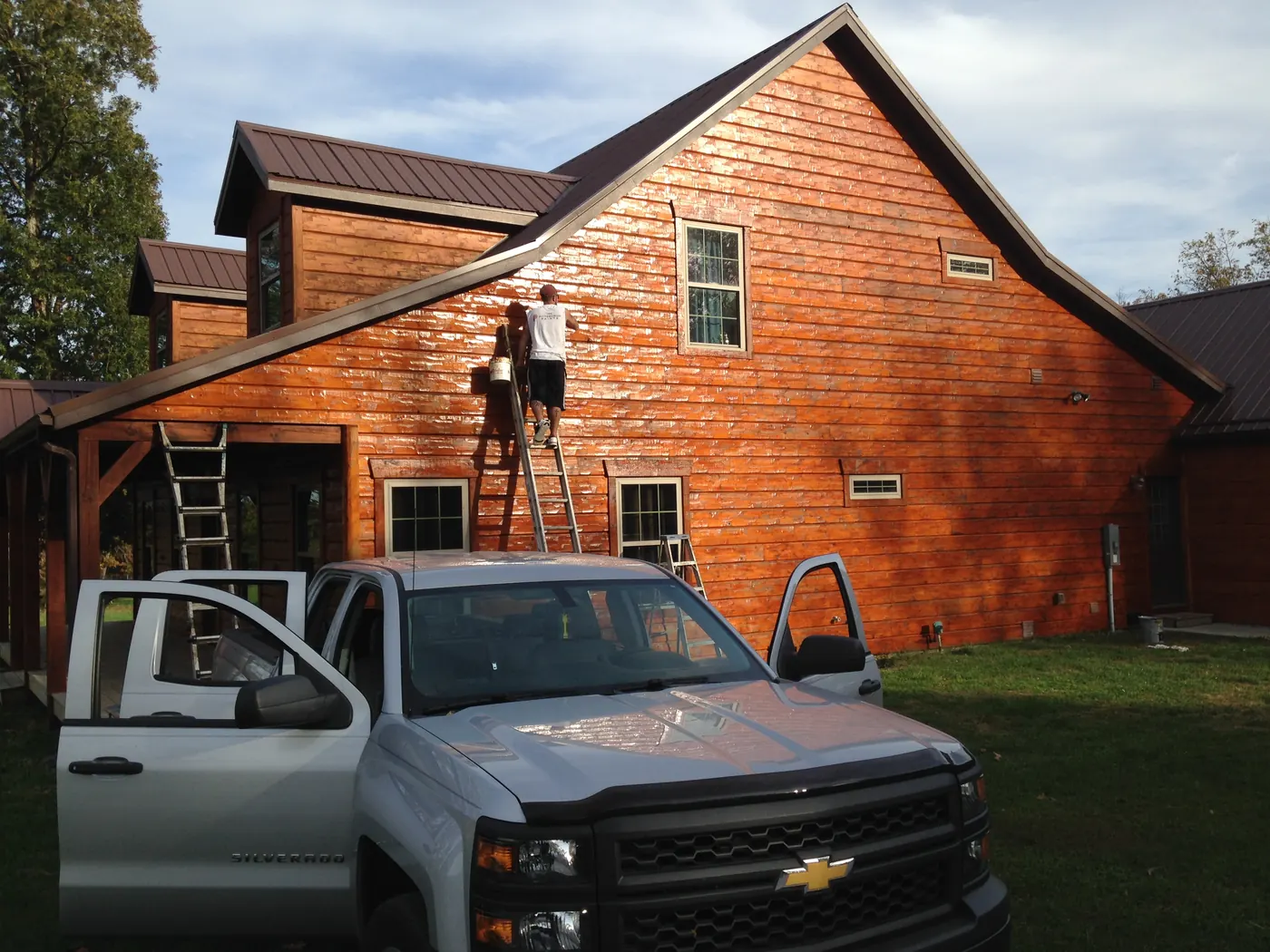
Painting stucco in Colorado: read the wall first.
Stucco fails when it is treated like wood siding. Its cracks, its moisture and its texture all change what goes on it.
To paint stucco in Colorado, first find out why it looks tired: chalk, hairline cracks, larger cracks or moisture. Wash it, repair and texture cracks, prime patches, then choose an elastomeric coating for dry walls with cosmetic cracking or a breathable masonry paint where moisture needs to escape.
Diagnose before you decide
- Chalk: powder on your hand means the old coating is breaking down; it must be washed off.
- Hairline cracks: common and cosmetic; elastomeric coatings can bridge them after repair.
- Wide, stair-step or growing cracks: movement or water; investigate first.
- Stains below windows or at grade: water management issues to fix before coating.
- Hollow sound when tapped: stucco separating from the lath; repair, do not paint.
Picking the coating
Elastomeric coatings go on thick and stay flexible, so they bridge small cracks and shed rain, but a heavy film can hold moisture in a wet wall. Breathable acrylic masonry paints let vapor out but will not hide cracks as well. Our Lakewood crews choose based on the wall, and the reason goes in the estimate. Our service page compares them: stucco painting in Lakewood.
Prep sequence
- Wash gently to clean without eroding texture.
- Open, fill and texture cracks with a compatible patch.
- Prime patches and chalky areas.
- Apply the coating at the manufacturer's coverage rate.
Timing
Stucco coatings need dry walls and temperatures inside the label range, so in Colorado this is spring-to-fall work.
Why Front Range stucco cracks
Stucco is rigid, and Colorado makes it move. Average overnight lows sit at or below freezing from November through March, so water that gets into a hairline crack freezes, expands and pushes the crack a little wider every winter. Dry air and strong sun shrink the surface during the day. Hail adds chips and spatter marks. That is why a crack you ignored for two winters is usually wider, and why sealing before coating matters more here than in a mild climate.
The temperature window, month by month
Coating labels set the limits. Sherwin-Williams' Duration data sheet, for example, requires air, surface and material above 35°F, at least 5°F above the dew point, and no forecast drop below 35°F within 48 hours. Here is how Denver's normals line up:
| Month | Avg high | Avg low | Outlook for stucco coatings |
|---|---|---|---|
| April | 61°F | 34°F | Possible on a warm stretch; nights often too cold |
| May | 71°F | 44°F | Season opens; watch spring storms |
| June–August | 81–88°F | 53–59°F | Prime window; avoid hot walls in direct afternoon sun |
| September | 77°F | 47°F | Excellent: mild days, dry air |
| October | 65°F | 36°F | Early month on warm spells; check the 48-hour forecast |
| November–March | 43–54°F | 17–26°F | Lows below freezing; we schedule interior work |
Source: NOAA 1991–2020 climate normals for Denver; Sherwin-Williams Duration Exterior data sheet. Averages only; the forecast for your dates decides.
Moisture and dew
Stucco holds water longer than wood siding. After rain, a sprinkler cycle or a snowmelt, give it time to dry before coating, especially on north walls and at grade. Sherwin-Williams also warns against painting on warm days when nights drop sharply, because dew forms on the surface after sundown, and most products need at least 4 hours of dry time before moisture. On stucco we stop early enough for the coating to set before evening.
Small habits that protect the coating
- Aim sprinklers away from the walls so the base stays dry.
- Keep soil and mulch below the weep screed at the bottom edge.
- Re-seal gaps around light fixtures, hose bibs and vents each fall.
- After a hailstorm, look for new chips at window corners before water does.
Sources
- NOAA 1991–2020 climate normals for Denver
- Sherwin-Williams, Duration Exterior data sheet and exterior painting FAQ
Straight answers
What is the best paint for stucco in Colorado?
It depends on the wall: elastomeric for dry stucco with hairline cracks, breathable masonry paint where moisture needs to escape.
Do I have to fix stucco cracks before painting?
Yes. Cracks should be opened, filled and textured; large or growing cracks need investigation first.
Can stucco be painted in October in Colorado?
Often in early October, on a warm stretch when the forecast keeps air and wall temperatures above the coating's minimum for 48 hours. Denver's average October low is about 36 degrees, so later dates get risky.
Get your Lakewood painting estimate
Tell us the address area, the rooms or surfaces, and how you want it priced. A crew lead follows up by phone or text.
Virtual: you send photos, we send a written price.
In person: we walk it with you and measure.
Call or text 720-208-5645, or email the office.